A sadder and a wiser man
The Rime of the Ancient Mariner“A sadder and a wiser man” names the Wedding-Guest’s condition after the Ancient Mariner’s tale has held him apart from a wedding celebration. He departs stunned and bereft of his usual composure, then rises the next morning with sorrow and understanding joined. The phrase gives the poem’s ending its measure of consequence: the story does not end when its teller goes, because its listener carries the tale away changed.
The closing scene
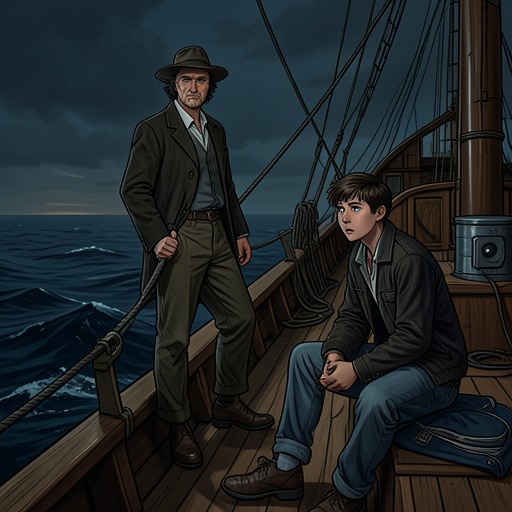
The phrase appears in the poem’s final movement, after the Ancient Mariner has spoken of the God who loves humanity and made and loves all creatures. The Ancient Mariner is described as bright-eyed and hoary with age; then he is gone, and the Wedding-Guest turns away from the bridegroom’s door. The abrupt transition sets the old teller’s enduring presence against his physical departure: the listener remains with what he has heard.
The Wedding-Guest’s response is rendered through visible action and condition rather than an explanation of his thoughts. He goes like someone stunned and deprived of his senses. The simile makes the tale’s effect immediate and disorienting, while the next line gives that disturbance a more lasting shape: by the following morning, he is “A sadder and a wiser man.” The change is not presented as a spoken lesson or a sudden resolution; it is registered in his departure and in the altered state with which he wakes.
Meaning of the expression
The paired adjectives hold together two effects that might otherwise seem opposed. “Sadder” registers the emotional weight of the encounter; “wiser” indicates that the Wedding-Guest has gained understanding. The poem does not specify a list of conclusions he draws, so the phrase’s force lies in naming a changed perspective without reducing it to a single stated moral. His grief and insight coexist rather than cancel one another.
That pairing also distinguishes the ending from a simple return to festivity. The scene began with a wedding and the Wedding-Guest’s movement toward its celebration; it closes with him turning away from the bridegroom’s door. The Ancient Mariner’s tale interrupts that social occasion, and the Wedding-Guest’s changed departure makes clear that listening has consequences beyond the telling itself.
Narrative function and significance
The closing expression transfers the poem’s burden from teller to listener. The Ancient Mariner has finished speaking and left, but the Wedding-Guest’s altered condition shows that the narrative has not simply vanished with its speaker. The listener becomes the final evidence of the tale’s reach: its effect is carried into the morning after the wedding encounter.
The final line’s compact contrast gives the ending a deliberately double tone. The Wedding-Guest is not described as simply instructed or comforted; he is sadder as well as wiser. By leaving the precise content of his new understanding unstated, the poem keeps attention on the cost and persistence of hearing the Ancient Mariner’s experience. The expression thus serves both as a portrait of one listener’s transformation and as the poem’s last account of what a tale can do to the person who receives it.